
Automated Palletizer Cost Breakdown: Purchase, Lease, or Subscription?
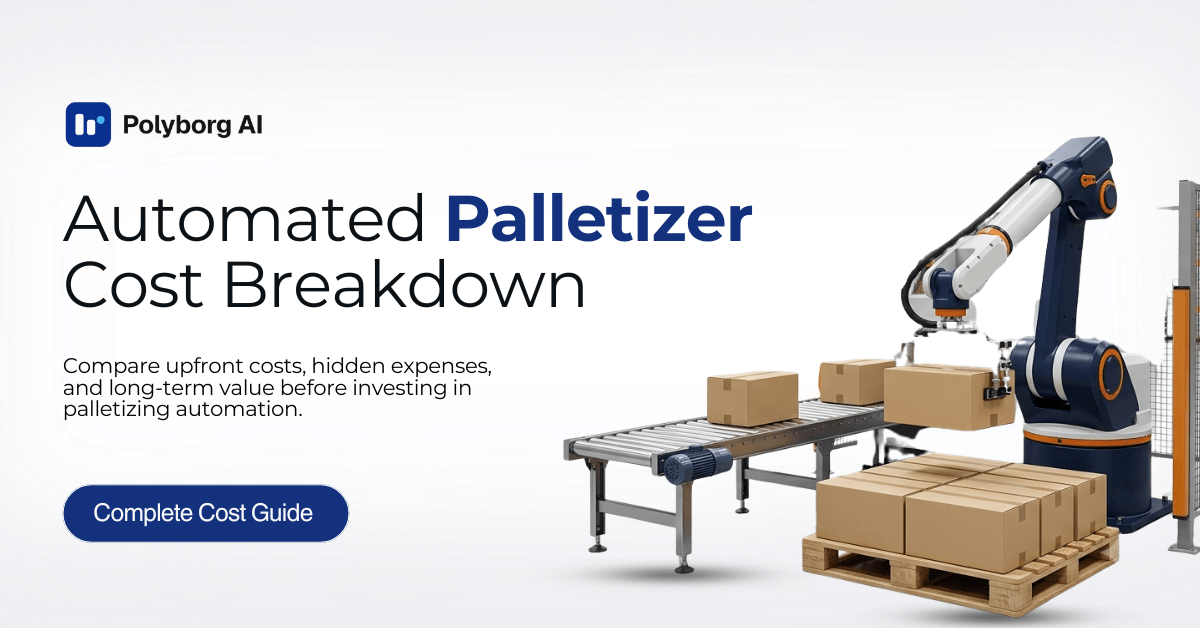
If you are pricing an automated palletizer, the first quote is rarely the full cost. The palletizer machine matters, but so do conveyors, guarding, controls, training, maintenance, floor space, and getting the cell production-ready.
For packaging manufacturers, the answer usually comes down to purchase, lease, or subscription. Each fits different budgets, risk tolerances, and operational conditions, and choosing the wrong one can add cost and complexity the original quote never showed.
What Drives Automated Palletizer Cost?
The cost of an automated palletizer depends on more than the robot or machine frame. A single-line application differs from a high-mix line with frequent changeovers, multiple patterns, tight floor space, or uneven upstream flow.
Common cost drivers include palletizer type, payload, case rate, pattern complexity, layout, safety guarding, controls integration, and installation work. More variation usually means more engineering and validation.
The plant should also include the operating problem. If finished cases wait, the cost discussion should include overtime, temporary labor, missed output, and supervisor time.
A beverage co-packer running mixed case sizes across two shifts is a common example. If operators are pulled from inspection or changeover support to keep pallets moving, the quote should be compared against lost line time, late trucks, rushed stacking, and startup support.
Option 1: Purchase the Palletizer
This can make sense when the application is stable, and the company can support it internally. If the product mix is predictable, volumes are steady, and maintenance can own another automation cell, purchase can be a clean long-term decision.
The challenge is that the purchase price is only part of the commitment. A bought system may still require integration, programming, spare parts, maintenance, training, and future changes. If the plant lacks automation support, those costs show up later as downtime or service calls.
Option 2: Lease the Equipment
Leasing can reduce the upfront capital burden, but it does not always reduce the operating burden. The plant may still manage integration, maintenance coordination, uptime expectations, and process ownership.
A lease can fit companies that want to preserve cash or match budget cycles. It may also work when the application is understood, and the manufacturer knows what palletizer machine configuration it wants.
The key question is what the lease includes. Does it cover only the equipment, or also service, repairs, monitoring, updates, and support? If it only changes payment terms, the plant may still carry many purchase-style responsibilities.
Option 3: Subscription or Robotics-as-a-Service
For packaging operations, the value is not only financial. A subscription model can help teams move faster when the end-of-line problem is clear but CapEx approval is slow, while shifting support responsibility to the provider.
This model tends to fit plants that need capacity quickly, have recurring staffing issues at palletizing, or want less ownership risk before a large purchase. It is also relevant for mid-market manufacturers that need manufacturing automation solutions but do not have a large automation department.
Subscription still needs proper evaluation. The provider should review case sizes, weights, rates, pallet patterns, floor space, flow, and uptime expectations.
Purchase vs Lease vs Subscription
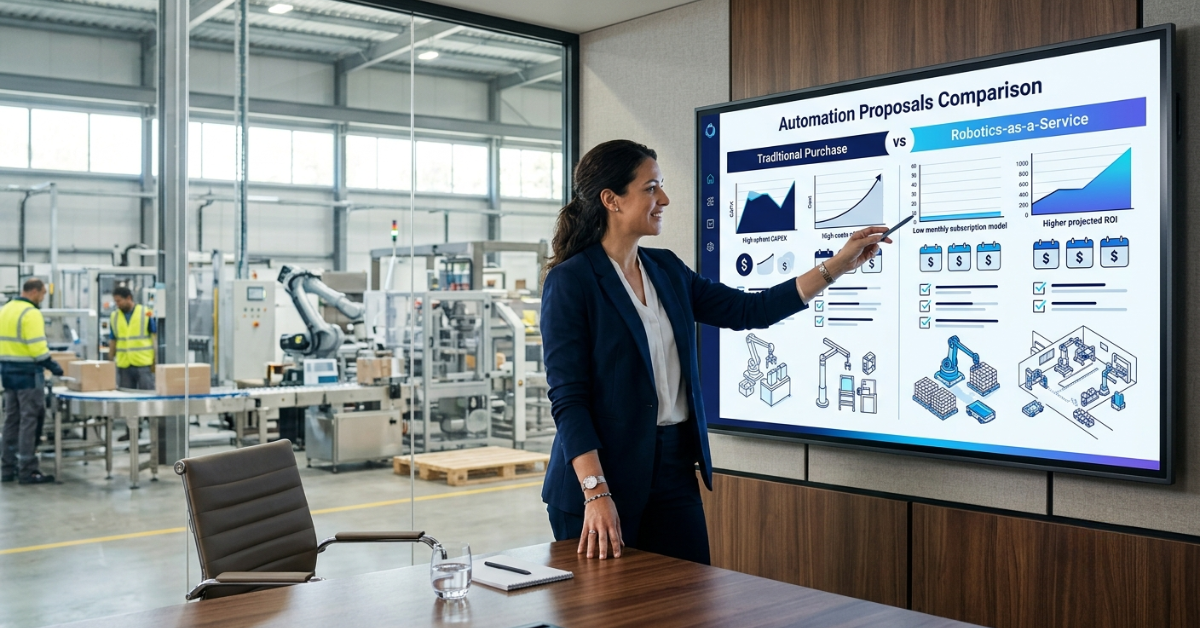
The right model depends on control, flexibility, and service support. A purchase is not automatically better because the manufacturer owns the machine, and a subscription is not automatically better because upfront commitment is lower.
| Decision Area | Purchase | Lease | Subscription / RaaS |
|---|---|---|---|
| Upfront commitment | Highest | Lower than purchase | Usually lowest |
| Ownership | Manufacturer owns asset | Lessor may own asset during term | Provider typically owns or manages system |
| Internal support required | High | Medium to high | Lower, depending on provider model |
| Flexibility if needs change | Lower | Medium | Higher |
| Best fit | Stable, long-term applications | Known applications with budget constraints | Clear palletizing need with limited CapEx or support bandwidth |
For many plants, the tradeoff is straightforward. If the team wants asset control and can support it, a purchase may fit. If cash flow is the issue, leasing may help. If speed and service coverage matter most, the subscription deserves review.
Hidden Costs Plant Teams Should Check
Before choosing a model, check the inclusions. A palletizer project often touches more than the robot itself. Operations managers should confirm responsibility for:
- Mechanical installation, electrical work, and air requirements.
- Conveyors, pallet dispensers, slip sheet handling, and stretch wrapping.
- Safety guarding, programming, operator training, and spare parts.
- Remote support, preventive maintenance, and response time when the cell is down.
Also, check whether nearby equipment can support the palletizer. A good robotic palletizer cannot fix inconsistent case flow, poor labeling, damaged cases, or a slow stretch wrapper. Those problems need to be visible before approval.
How to Think About ROI
A useful ROI review starts with current operations. How many operators touch palletizing each shift? How much overtime is used? How often does the line slow? How much time goes to covering callouts?
From there, compare each model against the operational improvement: fewer manual palletizing hours, better shift coverage, fewer late shipments, less overtime, and more stable output. For robotic palletizers, the business case is often strongest when the task is repetitive, physical, and tied to throughput.
Questions to Ask Before You Request a Quote
Before asking for automated palletizer pricing, gather the basics: case dimensions and weights, cases per minute, shift schedule, pallet patterns, SKU count, floor space, palletizing labor, overtime levels, and nearby equipment.
Also, ask how the provider supports the system after deployment. For any packaging automation solutions, the service model matters as much as the equipment. A hard-to-support system does not solve the plant's problem.
Conclusion
An automated palletizer cost breakdown should include more than the machine price. Purchase, lease, and subscription solve the financing question differently, but the plant still needs throughput, safety, and support when something goes wrong.
If the application is stable and the team can own the asset, buying may make sense. If the equipment is known and the budget needs flexibility, leasing may be enough. If the plant needs faster deployment and stronger service coverage, a subscription may fit better.
For manufacturers seeking faster deployment, reduced ownership risk, and ongoing service support, a subscription-based Robotics-as-a-Service model may be the most practical option.
Book a Palletizing Assessment
Share your palletizing line details with Polyborg AI for a practical review of purchase, lease, and subscription options, so you can identify the lowest-risk path before committing budget or floor space.
FAQ
Frequently asked questions
- How much does an automated palletizer cost?
- Cost depends on case rate, payload, pallet patterns, layout, controls, guarding, installation, and support. Estimate the full workcell, not only the robot or frame.
- Is it better to buy, lease, or subscribe to a palletizer?
- Buying fits stable applications with strong internal support. Leasing helps budget flexibility. Subscription can fit plants that need faster deployment, service coverage, and lower ownership risk.
- What hidden costs should be included in automated palletizer pricing?
- Check installation, conveyors, guarding, programming, training, spare parts, maintenance, remote support, and downtime response.
- When does a robotic palletizer make sense for a packaging line?
- It usually makes sense when palletizing is repetitive, difficult to staff, physically demanding, or limiting end-of-line throughput.
- Can a subscription palletizer support high-mix packaging?
- Yes, if the application is reviewed. Case sizes, pallet patterns, SKU changes, rates, and floor space should be validated first.